

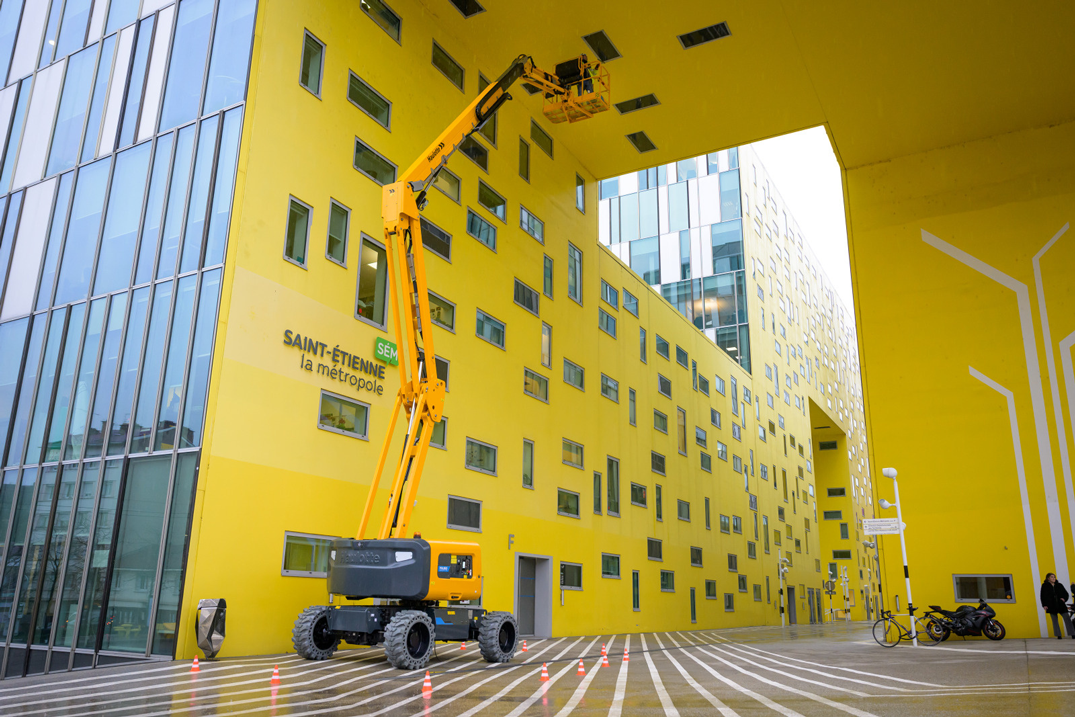
In this article, we answer 8 of the most frequently asked questions about AWP safety to help users operate these machines responsibly and securely.
Operating aerial work platforms (AWPs) demands a strong focus on safety, as these machines are crucial for completing tasks at heights while protecting users from risks. From the necessity of training to the use of proper personal protective equipment (PPE), safety in AWP operation is a topic of constant discussion.
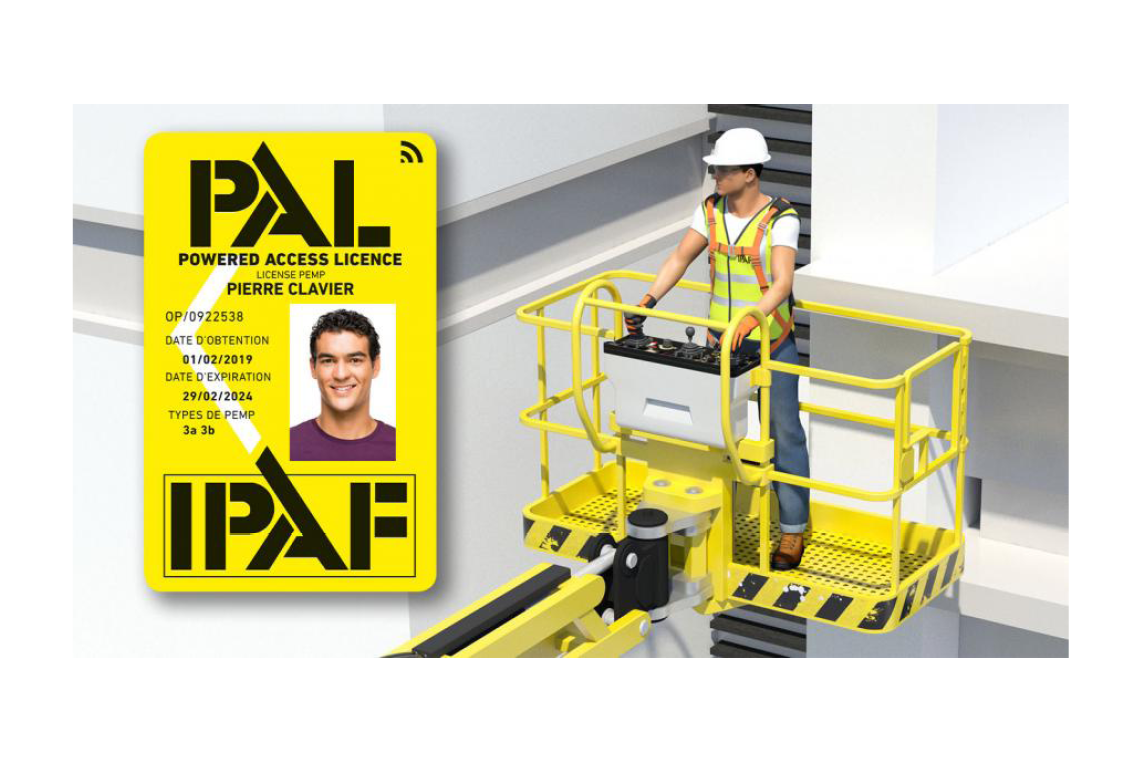
1. Does a passenger in a MEWP need a licence?
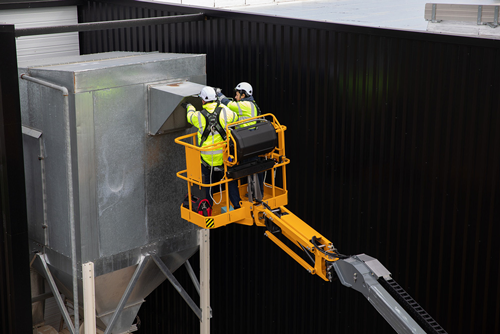
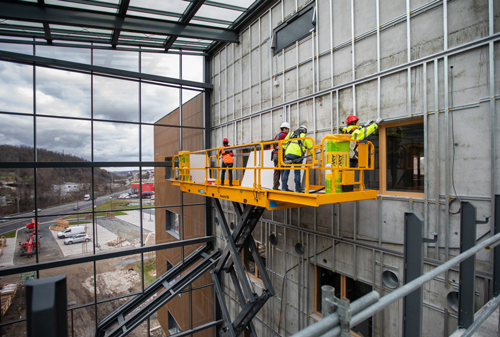
No, only the operator of the MEWP requires a licence. However, any passenger in the platform must wear suitable PPE, including a protective helmet, high-visibility clothing, and other equipment as needed, for example safety gloves and shoes.
Safety protocols for both operators and passengers are critical to prevent accidents and ensure everyone’s safety.
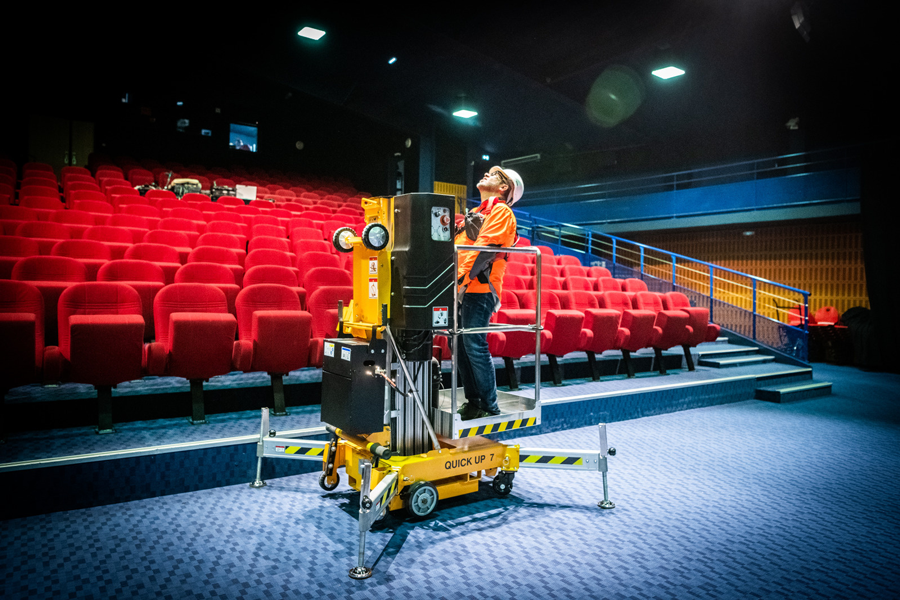
2. Do I need training to operate a Push Around Vertical (PAV) lift or Low Level Access (LLA) ?
Yes, training is required for operating a Push Around Vertical (PAV) lift, even though it may seem simple. In most areas, training is legally mandated, and the International Powered Access Federation (IPAF) advises a half-day course for this specific equipment.
For operators who hold a valid Static Vertical (1a) or Mobile Vertical (3a) licence, familiarisation with the machine suffices and should be documented in your IPAF logbook or ePAL app.
It’s important to note that PAVs operate differently from other AWPs, and training on one category does not automatically qualify an operator to handle another.
3. Is it permissible to operate a MEWP from ground controls with a passenger on board?
Operating a Mobile Elevating Work Platform (MEWP) from the ground controls while a passenger is on the platform is generally not recommended.
This setup can make it challenging to judge distances and maintain spatial awareness.
However, in exceptional cases, such as when a camera operator needs a specific angle away from overhead hazards, a thorough risk assessment can justify this practice, provided all safety protocols are strictly followed.
4. Can I exit the platform of a MEWP while elevated?
Exiting a MEWP at height is totally discouraged.
Operators should ensure their footing remains secure and avoid leaning beyond the guardrails.
For tasks requiring access to confined or restricted areas, using a manufacturer-approved device specifically designed for such spaces is highly recommended.
5. Should I wear a harness in an MEWP?
The requirement for a harness depends on the type of MEWP being used.
For boom lifts, both static (1b) and mobile (3b), it is advised to wear a short lanyard or an energy-absorbing harness to prevent falls.
For vertical lifts like Static Verticals (1a) and Mobile Verticals (3a), a harness is typically unnecessary unless mandated by local regulations.
Special cases, such as working over water, require a risk assessment to determine whether a harness or life jacket is more appropriate.
As a manufacturer, Haulotte recommends the use of a harness regardless of the type of MEWP, to ensure the complete safety of operators when using the aerial work platform.
WordsCharactersReading time
6. How many operators can work on the platform at one time?
MEWPs have strict load limits, which include the combined weight of operators, tools, and materials.
Each machine’s load capacity and maximum occupancy are specified by the manufacturer.
This information should be checked and respected before starting any operation to avoid overloading, which could result in equipment failure or tipping.
7. When shouldn't you operate an MEWP due to weather conditions?
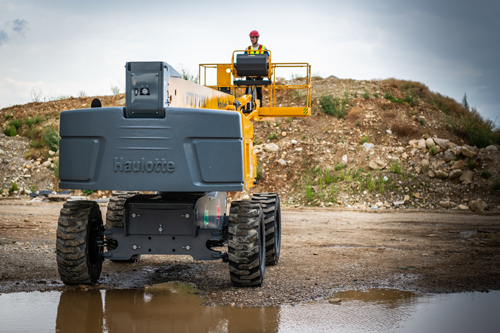
Operating an MEWP in adverse weather, particularly during high winds or storms, is dangerous.
MEWPs designed under EN standards are stable up to winds of 12.5 meters per second (45 km/h). It is essential to check the wind speed limit, which should be indicated on the safety plate.
Avoid MEWP operation if there’s a risk of lightning; instead, seek shelter until the storm passes.
8. Why is it important to inspect the AWP’s Documentation?
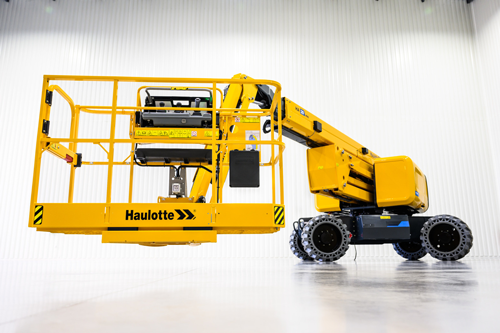
Before using a rented AWP, ensure all required documents are available, including the user manual, maintenance log, and the latest inspection report.
These documents verify that the AWP meets all regulatory standards and has undergone necessary maintenance.
Ensuring that all recommended repairs and updates are completed is also essential for safe operation.
WordsCharactersReading time
WordsCharactersReading time
Ensuring the safety of aerial work platform operators and passengers is crucial in any work-at-height project. By adhering to safety training requirements, following pre-use checks, and using the right PPE, operators can significantly reduce the risks associated with AWP use.
Understanding these safety fundamentals will help maintain safe work environments and minimize accidents. For further guidance, consult your local safety regulations or training programs, such as those offered by IPAF, to stay up to date on best practices.