


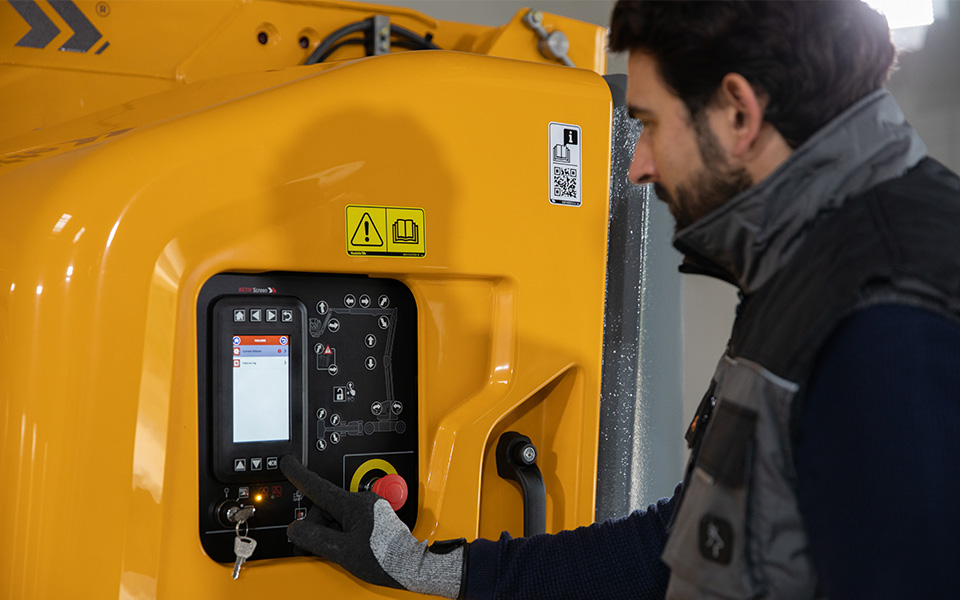
Mobile Elevating Work Platforms (MEWPs) are lifting equipment. As with all worksite equipment, proper care and maintenance guarantee optimum performance for you and your customers, and operator safety. MEWPs must be inspected when they are put into service, periodically, and when they return to service after a repair or modification. Load calibration is one of the most important points to check, ideally every six months.
What does overload mean?
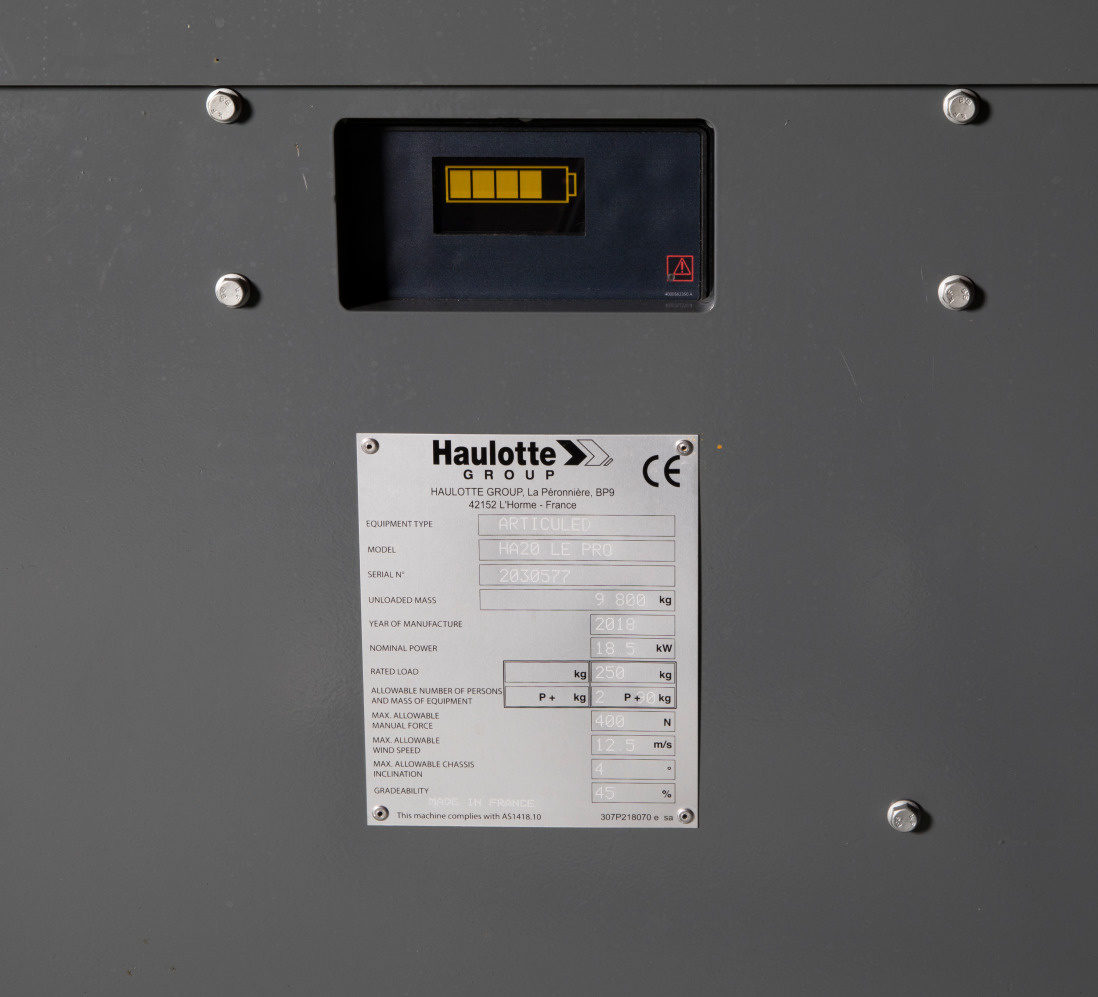
The overload system of the basket or platform stops machine operation when the load capacity is exceeded. The machine's load capacity is always indicated on the manufacturer's plate, riveted to the chassis.
Operating a MEWP despite overload warnings can, over time, make it impossible to assess the load on board correctly. Operator safety is directly linked to machine stability: if the overload is assessed incorrectly, stability can be compromised and the machine may tip over.
What is the purpose of load calibration?
Load calibration checks that the overload system of the basket or platform:
- works properly,
- accurately measures the weight loaded in the basket or platform,
- detects any overload and warns the operator.
When should load calibration be performed?
- During maintenance and periodic inspections.
- After buying a used aerial work platform, before using it on a job site for the first time.
- After changing or repairing a component involved in load calibration. In this case, the calibration procedure is included in the assembly instructions of the replaced part or component.
- When the MEWP fails to lift its maximum rated load and reports it with an alert or a fault code on the control panel.
How is load calibration performed?
Whatever the manufacturer, the load calibration method is detailed in the maintenance manual and depends on the MEWP model. Depending on the model and the on-board technology (pressure angle or strain gauges), several methods exist, including static and dynamic tests.
Systems using strain-gauge technology
A static test, in which the machine is subjected to several load levels:
- a calibration test with no load,
- a calibration test with a variable weight from 75 to 300 kg,
- a calibration test at maximum rated load.
Systems using angle-pressure technology
Static test: the machine is subjected to several load levels, including its maximum working load. Weights are placed in the basket or platform while the machine is held in the lowered, folded position. During this test, the ECU compares the weight on board with the weight perceived by the strain gauge.
Dynamic test: the machine bears its maximum working load in every elevation position, up to full height. The angle sensors on the arms and cylinders evaluate a pressure angle, from which the on-board weight is calculated.
3 tips for a successful load calibration
- Work indoors: Calibrate in a workshop. Indoors, there is no wind to distort the calculations during dynamic tests, and you may be able to use a lifting ramp to place the weights in the basket or platform.
- Use weights of known value: If possible, use calibrated weights with an exact, known value.
- Check the result: Place a weight of known value in the basket, then launch the « Estimated Load » process from the on-board diagnostics tool. If the weight shown matches the weight in the basket, the load calibration is successful.


